November 03, 2026
From Value Ambitions to Value Realization: Closing the Value-Gap and Leading through Execution Challenges
Dr Fernando Kevin Vince PhD, DBA
Introduction
Business competitiveness is closely linked to economic value, making value creation a central theme driving strategy, resource allocation and management decisions. A company growing its revenue and EBITDA may not necessarily be creating value. Growth creates value when the returns it generates on invested capital exceed the costs of that capital and this is why value creation becomes a strategic priority. Businesses operate in a context where limited resources require leaders to do more with less. Increasing levels of transparency and analysis easily flag-out firms that are failing to maximize shareholder value.
When investing in a business an investment thesis is developed for the target company with a list of value creation priorities. Initiatives are launched to close this value gap, together with key performance indicators to track progress which ultimately aim to improve cashflow, deliver higher returns on invested capital and a stronger exit value. Value creation strategy needs to move from intent to operational reality and this paper explores:
- The idea of value creation as closing the “value gap” between current enterprise value and potential enterprise value.
- Steps to close value gaps.
- Address common obstacles and causes for failed value creation implementation at both strategic and tactical levels.
- Outline a coordinated multi-layered change management approach for value creation implementation for improved enterprise value.
Strategic Value Creation and Closing the Value-Gap
Value creation succeeds when it is part of the overall business strategy and is integrated into the operating system rather than a standalone collection of initiatives. Successful value creation increases enterprise value making it a strategic priority and capability that:
- Translates business strategy into value drivers.
- Cascade business level objectives from the executive team to middle management and then to frontline employees and teams.
- Assigns cross-functional ownership of objectives and initiatives, integrate quality, operations, commercial and finance.
- Deploy standardized playbooks and make use of digital enablement (i.e. technology, data and automation) to make initiative deployment faster, scalable and measurable.
- Align organization structure, processes, technology and people investments to support deployment.
- Clearly defines governance, decision-making structures, review cadence and scheduled initiatives portfolio reviews.
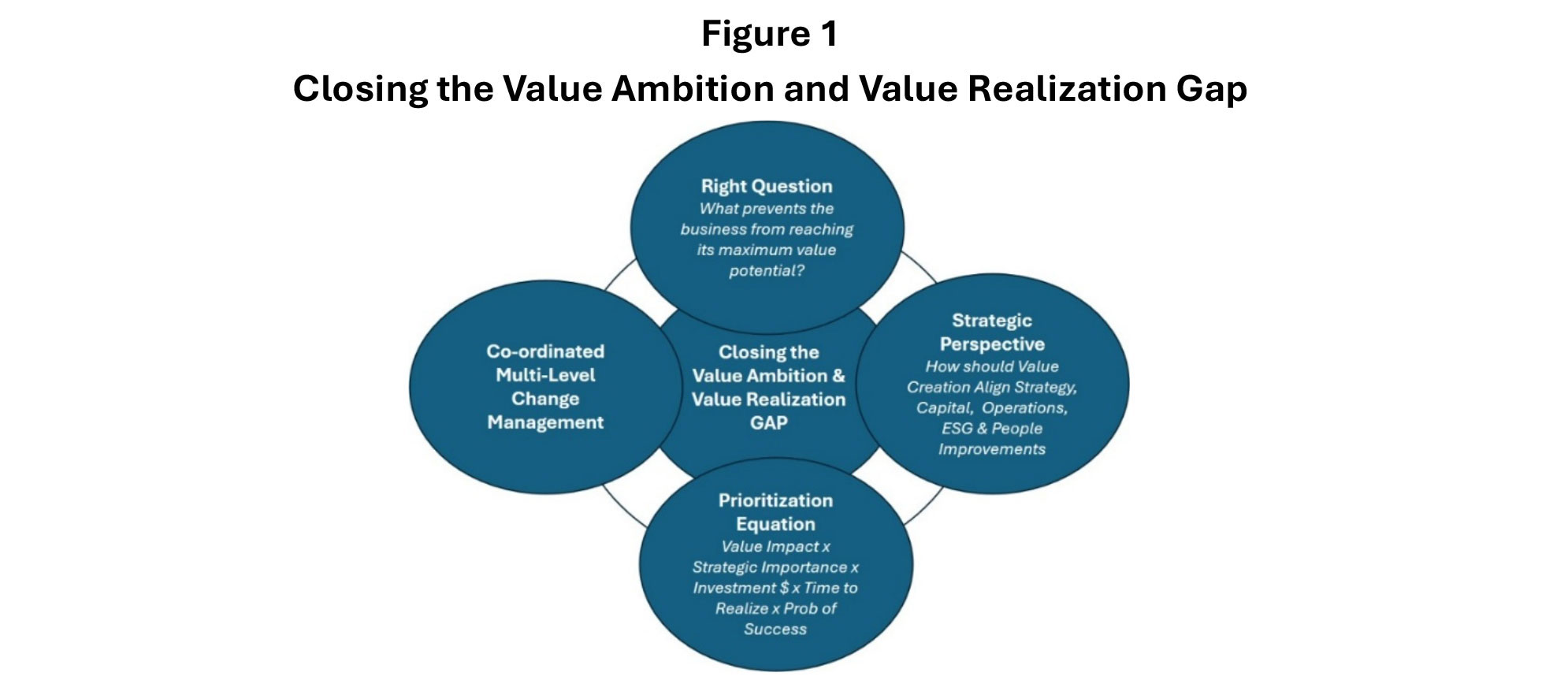
Every organization has a current enterprise value (EV) that reflects what the business is worth today based on its existing performance, growth outlook, risk profile and market expectations. This value may not fully reflect the potential EV the business could achieve if its underlying strategic and operational opportunities and resources were realized. This gap between the current EV and the potential EV is what is referred to as the “Value-Gap”. Figure 1 presents a framework to close this gap:
- Asking the right questions.
- Embracing a strategic perspective around value creation.
- Prioritizing.
- Adopting a coordinated multi-layer change management program.
Source: developed for this paper
Starting from the most basic question: Where does value reside? According to literature and prior research, enterprise value increases when a company generates higher, more sustainable cashflows, deploys capital more eYiciently and reduces the risk and uncertainty associated with those cashflows. Viewing value creation not as an initiative but a management discipline from the outset aligns strategy, capital, operations and people around sustainable improvements in cashflow and returns on invested capital. Initiatives need to connect with the value drivers of the business. A simple example is as follows:
Today’s enterprise value = $300million and the vision is to achieve a future enterprise value of $700million in 5 years. The value gap of $400 million needs to be decomposed into the underlying enterprise value drivers and the objectives and key results that need to be achieved.
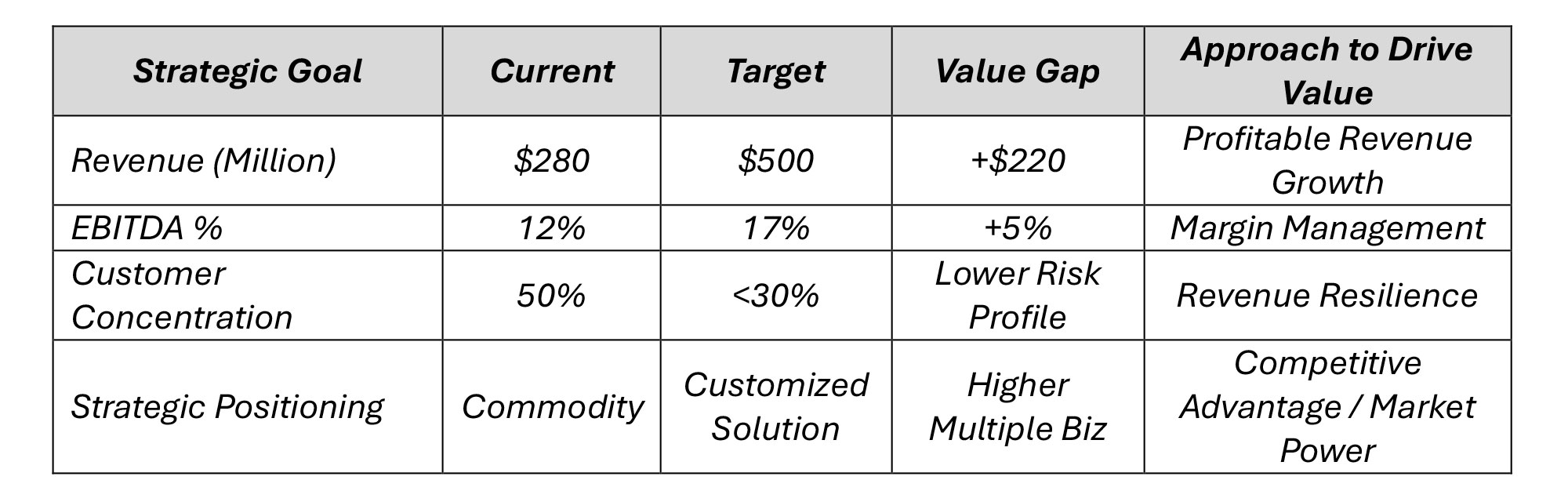
Further examples of how value drivers improve economic value of a company are listed below:
- Revenue growth – Launching a new product line that generates incremental profit of $10 million.
- Margin improvement – Automate a process resulting in a margin improvement from the product from 10% to 15%. Deploy a value pricing approach to capture 2% price increases.
- Capital eEiciency - Improved working capital management resulting in a $20million reduction, profit remains the same, invested capital is reduced and overall ROIC improve creating more value for every dollar invested.
- Competitive advantage – Implements a new digital ecosystem that reduced customer churn from 15% to 6% future business is more stable.
- Risk mitigation – Invest $2million in a cybersecurity system, resulting in a potential loss exposure estimation from $20million to $5million.
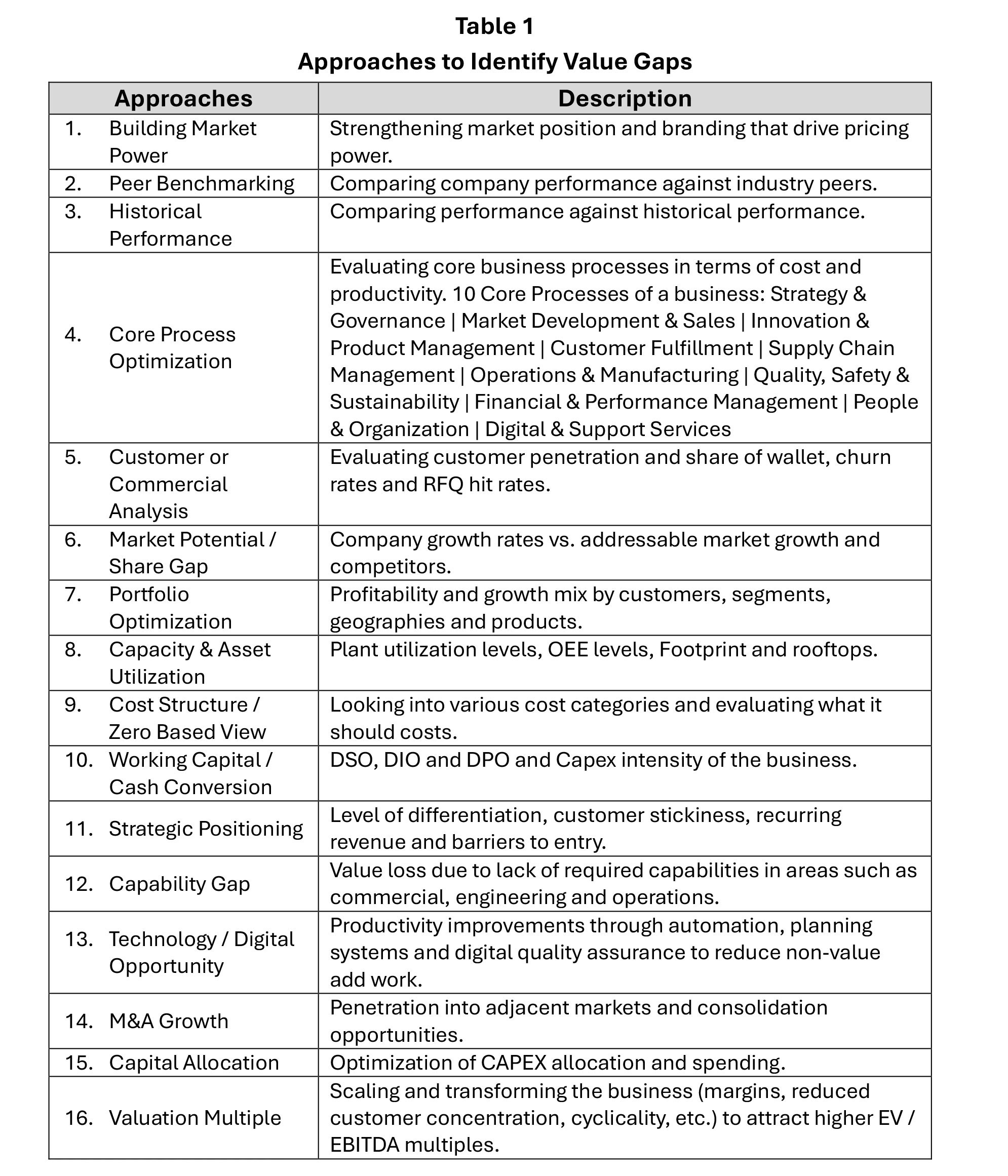
The framework presented in Figure 1, starting from the center, takes the position that every organization has a vision of where it wants to go in the future and describes what success looks like. This vision would be expressed as strategic goals around dimensions such as growth levels, margin, market position, etc. The vision provides the direction but does not define how value will be created. The vision may be understood as the “Value Ambition” and the “Value Realization” gap that needs to be closed. There are various approaches to identify the value gap, some of these are presented in Table 1.
Source: developed for this paper
Asking the “Right Question” – Successful value creation starts with asking the right strategic question before jumping into defining initiatives. Strategic questions should be framed to open-up thinking and expose choices. Instead of asking: What is the list of value creation initiatives? The questioning process should be reframed asking:
- Where are we today?
- Where is there unrealized value?
- What prevents the business from reaching its maximum potential?
This approach and sequence move from diagnosis to value gap identification, to identify value drivers, to decide on strategic priorities and what must be done diYerently to capture them.
Strategic perspective – Value creation as an integrated approach deliberately aligns major business levers (i.e. the operational and commercial things management can directly change or influence) toward increasing the sustainable enterprise value. Five dimensions that need to align with value creation goals are strategy, capital allocation, operations, ESG and people.
- Strategy: Which markets, customers, products and competitive position will help the company generate superior growth and profitability?
- Capital allocation: Where do we need to invest capital to capture the highest return opportunities?
- Operations excellence: Where and to what degree do we need to improve productivity, quality, costs, capacity, supply chain and capability to deliver the value?
- ESG: How do we make our value creation sustainable through resource eYiciency, safety, risk management and governance?
- People: What is the type of leadership, organization design, incentives, talent and culture required to execute?
The five dimensions of value creation, Strategy, Capital Allocation, Operational Excellence, ESG, and People, should not be viewed as separate initiatives competing for attention. They form an integrated system in which strategic priorities provide the direction, and each dimension acts as a lever that reinforces the others. From a systems perspective, the key strategic questions help determine where the organization can create sustainable competitive advantage.
The resulting strategic priorities then guide how capital is deployed, where operational improvements are focused, which ESG commitments are most material, and what organizational capabilities and talent are required. In turn, decisions made in each dimension influence the effectiveness of the others, creating either virtuous cycles of value creation or unintended trade-offs. Success therefore depends not on optimizing any individual dimension in isolation, but on ensuring coherence and alignment across all five dimensions toward a common value creation objective.
Prioritization – Recognizing that not every opportunity creates equal value and organizations must work with limited resources (i.e. Capital, management capacity and time) a strong prioritization process is essential. A simple equation that may be used is:
Value Impact x Strategic Importance x Investment $ x Time to Realize Benefits x Probability of Successful Execution
Value impact clarifies how materially it can improve revenue and EBITDA; Strategic importance clarifies how strongly it supports the strategic direction and competitiveness of the firm; Investment dollars relate to the amount of funding required; Time to realize benefits and what is the probability of success is self-explanatory.
Co-ordinated multi-level change management – this involves managing value creation not as a set of initiatives but as a coordinated transformation across three levels of the organization. The enterprise level is where clarity, executive sponsorship and engagement around direction and alignment. At the business unit or functional level, it is about eYective translation, ownership, prioritization and sequencing. At the frontline the focus is on changes to work processes, behaviors, capabilities and accountability.
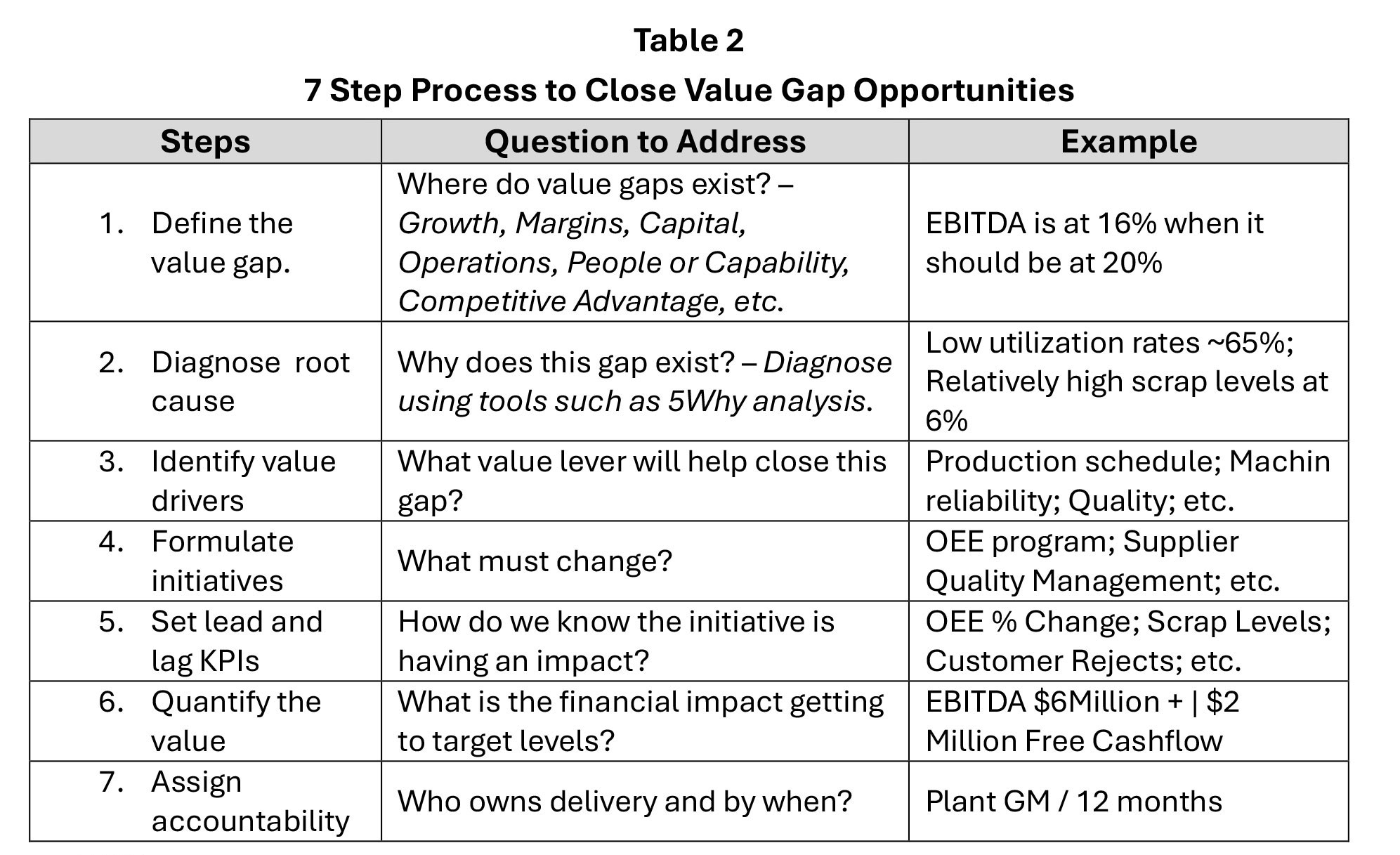
Table 2 provides a simplified step by step process of how this would be executed in an organization.
Source: developed for his paper
Value Creation Obstacles and Causes for Failure
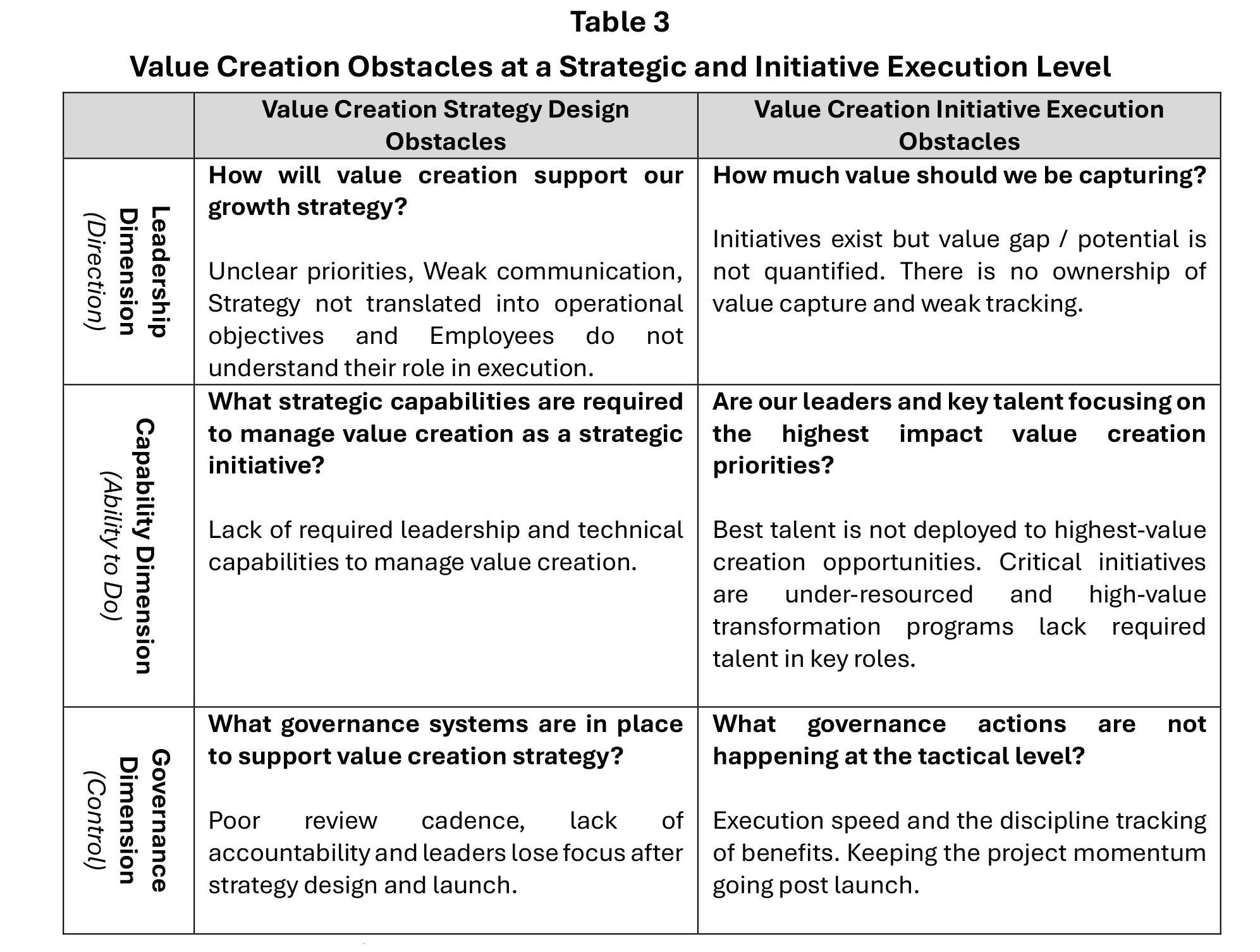
Value creation starts at a strategic level and moves into a more tactical level during execution. At both levels value creation deployment faces obstacles broadly around three key areas of leadership, capability and governance. A summary of these is outlined in Table 3. Overcoming these obstacles requires a coordinated approach to transformation and change management across three levels of the organization: enterprise, business or functional levels and front-line individuals and teams.
Source: developed for this paper
Causes for Failed Organization Value Creation Strategies - The mapping of value creation opportunities, computation of “value gap” opportunities to close is often backed by analysis. Even when these are followed by disciplined planning value creation strategies fail. The problem is rarely the strategy itself but has more to do with execution and the inability to translate these plans and objectives into a cohesive and coordinated set of actions. Without strategic clarity and alignment, it is logical that individual functions will aim to optimize their performance instead of aligning around organization or enterprise level priorities. Common causes of failure include:
- Strategic clarity and alignment - Strategic alignment – clarity of value creation thesis, competing strategic priorities, short-term financial pressure vs. long-term value, poor capital allocation, weak governance and decision making, lack of executive alignment.
- Failure to translate strategy into clear priorities and measures - Employees often understand their tasks but not the strategic intent behind them.
- Strategy as an annual event - Traditional planning assumes leaders can design a multi-year strategy and then execute it unchanged.
- Capability readiness – does the organization have the capabilities it needs to deliver on the strategy. Capabilities could relate to leadership, culture, change willingness, talent needs, digital and technology maturity, data and resource constraints. A common reason strategies fail is not because the strategy is wrong, but because the organization lacks the capabilities, skills, behaviors, and resources required to deliver it.
- Changing External forces create challenge assumptions around value creation opportunities. These could be economic cycles, interest rates, inflation, supply chain disruptions, regulatory change, customer expectations, ESG regulations and competitive intensity.
Literature is filled with best practice prescriptions (examples listed below) however they need to be customized and deployed as a coordinated multi-layered approach.
Examples of change management best practice prescriptions:
- Successful companies convert high-level strategy into a small number of measurable priorities, objectives, KPIs, and accountabilities. Kaplan and Norton's Balanced Scorecard is one of the best-known frameworks for doing this, linking strategic objectives directly to operational activities and performance measures.
- Leading organizations identify the few critical capabilities that create competitive advantage and ensure talent, structure, incentives, and culture are aligned behind them. Strategy and execution should not be managed as separate activities.
- HBR authors increasingly argue that strategy must be treated as an ongoing cycle of deciding, acting, learning, and refining. High-performing organizations regularly review progress, test assumptions, adapt to changing conditions, and maintain separate conversations about strategy and operations.
Multi-Layered Approach for Successful Value Creation
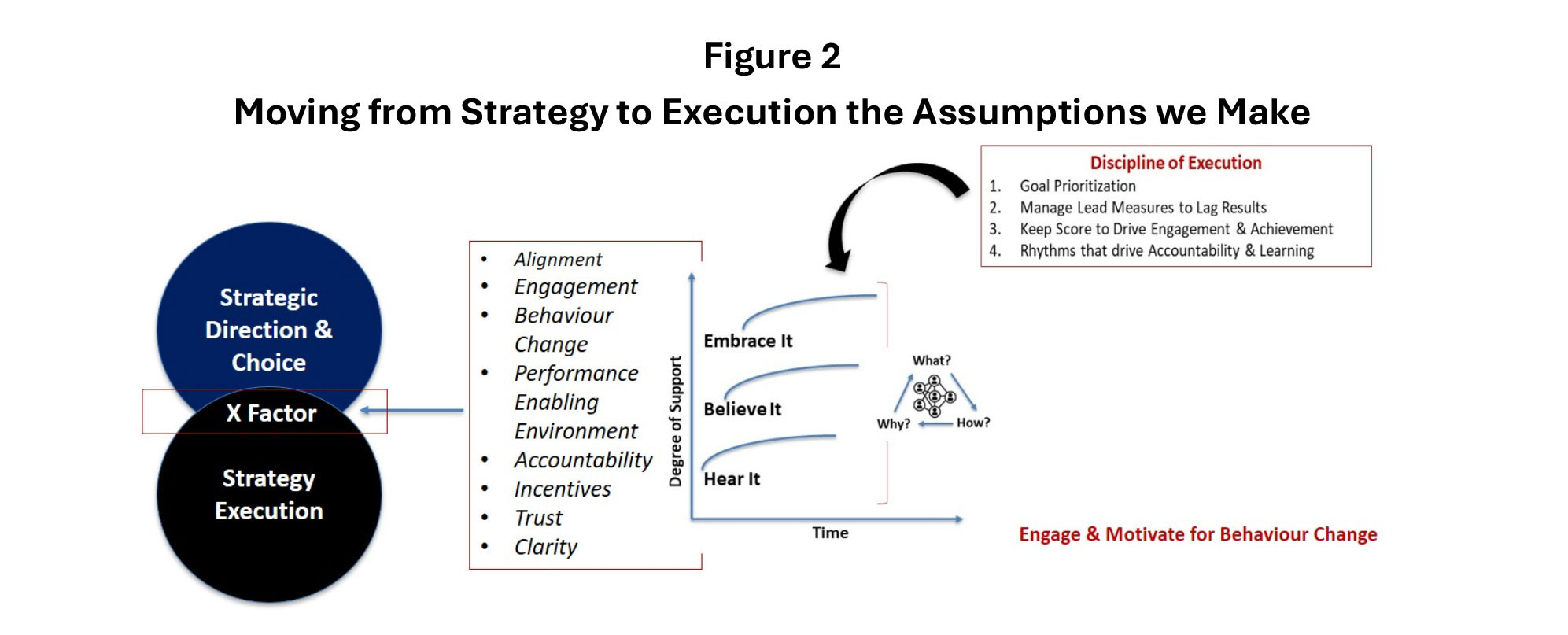
According to research, only 55% to 65% of planned strategy is implemented and realized (Mankins & Steele 2005; EIU 2013). The process of strategy implementation is assumed to flow from direction setting. Successful transition from one stage to another assumes multiple issues (refer to Figure 2) such as alignment, engaged employees, performance enabling environment, incentive systems that drive the right focus and behaviours. This is often far from reality. Moving from direction setting to execution requires both discipline and structure to change management with the goal, to move people and teams from hearing and understanding the strategy, to believing and embracing it.
This transition requires a combination of disciplines execution system that include components such as SMART (Specific, Measurable, Action Oriented, Realistic, Time bound) goal setting and prioritization, develop and deployment of lead and lag performance measures, a mechanism to keep score to monitor progress and drive achievement and defined rhythms to build accountability and learnings. The second portion is tactics to engage and motivate the workforce to engage and commit to strategic initiatives. Examples include incentive and recognition programs, training and development support, coaching, celebrating early wins, engaging in leadership and employee dialogue sessions.
Source: developed for this paper
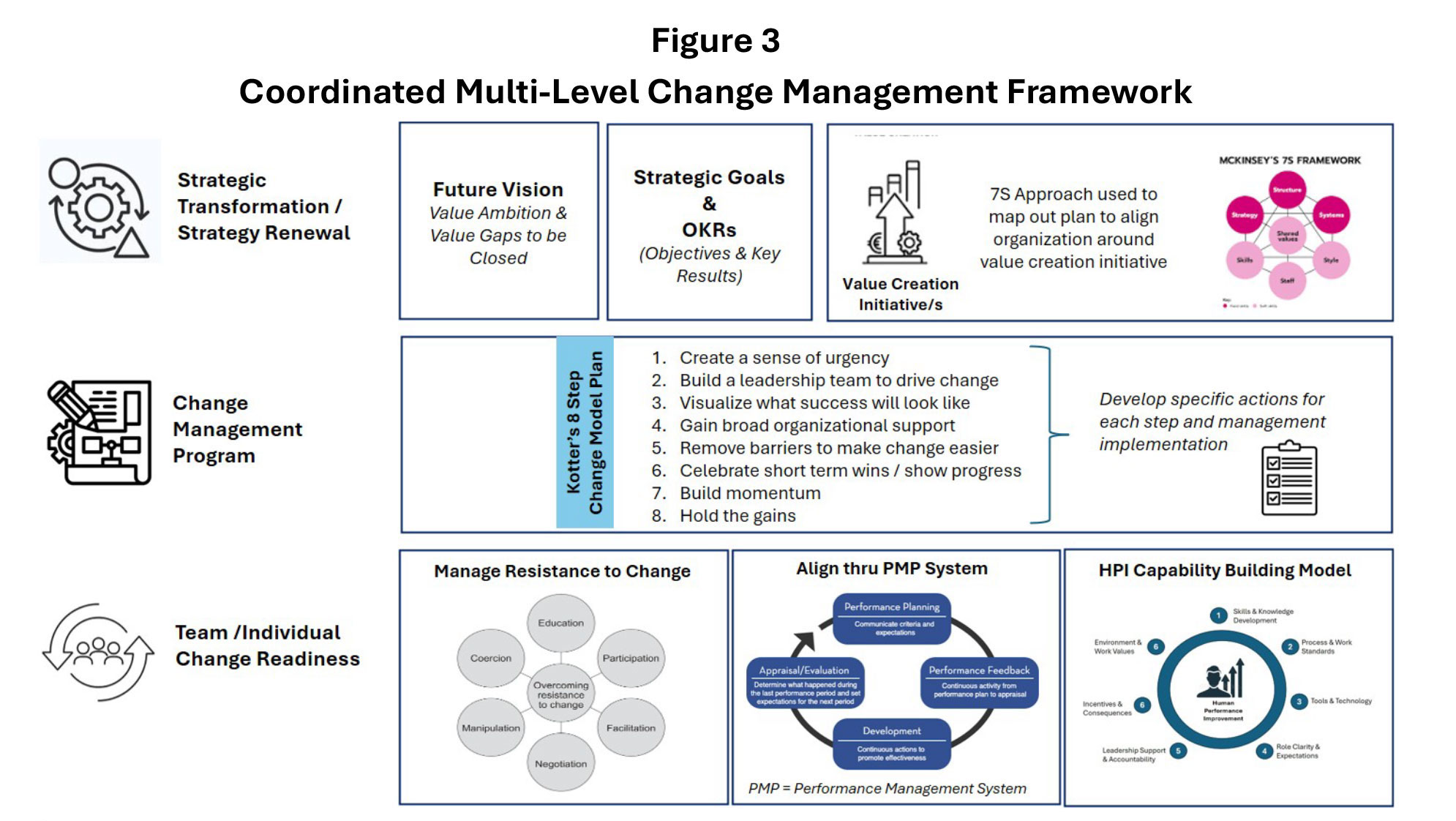
There is extensive literature and research around change management. These studies vary in their level of focus, some at a more strategic transformational level and others at a more team and individual level. Integrating insights from this body of work allows us to come up with a coordinated multi-level change management program that improves deployment eYectiveness of value creation initiatives aimed to close the gap between current enterprise value and future enterprise value ambitions. This approach is presented in Figure 3.
Source: developed for this paper
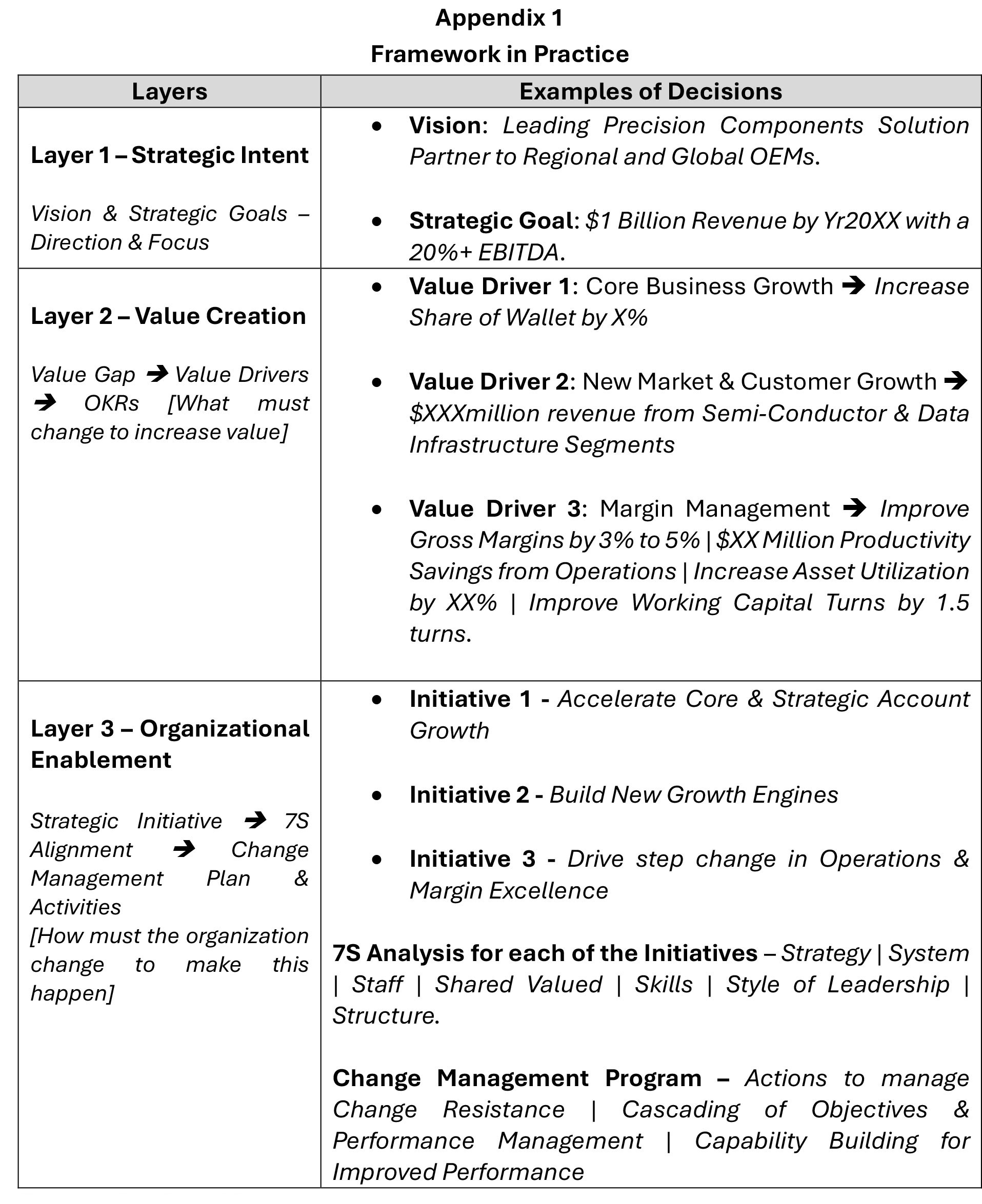
Think of the framework presented in Figure 3 as comprising three layers that should be deployed in a coordinated approach:
- Layer 1: Strategic Transformation / Strategy Renewal
- The outcome from this layer is for leadership to define a clear future vision from the organization that addresses its value ambitions and gaps to be closed. These could be around areas such as revenue, EBITDA, market share, operating footprint, etc. (Refer to Table 1 of this paper). These value gaps need to be converted into strategic goals and OKRs (Objectives and Key Results). Taking a systems perspective, tools such as McKinsey 7S framework could be used to understand the broader implications linked to goal achievement across the organization. This is essential to design and drive cohesive eYorts across the enterprise.
- Layer 2: Change Management Program Design
- Sustainable execution depends a lot on changing behaviour, Kotter (2026) provides an eight-step checklist that provides a useful guide to develop a complete change management program. These eight steps are outlined in Figure 3.
- Layer 3: Team and Individual Change Readiness
This layer has been divided into three components: (1) Managing resistance to change; (2) Aligning eYorts through a performance management program (PMP); (3) Developing capabilities through the human performance improvement (HPI) model.
- Managing resistance to change – this generally occurs because people fear uncertainty, losing control, increased workload, or the possibility that they may not have the skills needed to adapt to the new situation. Employees may also resist if they do not understand the reasons for the change or believe it could negatively aYect their roles, relationships, or job security. To overcome resistance, organisations should communicate clearly about the purpose and benefits of the change, involve employees in the process, provide adequate training and support, and address concerns openly. Building trust, encouraging participation, and demonstrating strong leadership can help individuals feel more confident and committed to the change, increasing the likelihood of successful implementation.
- Alignment, ownership and accountability through performance management – this requires moving people from being passive recipients of change to active participants in delivering outcomes. Leaders can achieve this by involving employees in goal setting and solution design, clearly defining decision rights and responsibilities, linking objectives to measurable KPIs, assigning named owners for key initiatives, providing regular performance feedback, and recognizing achievements that contribute to strategic goals. Accountability is strengthened through transparent dashboards, structured review meetings, and visible progress tracking, while ownership grows when individuals have autonomy to influence outcomes and understand how their work contributes to organizational success. Short-term wins, peer accountability, leadership role-modelling, and consistent follow-through on commitments further reinforce a culture where people feel personally responsible for delivering results rather than simply completing tasks.
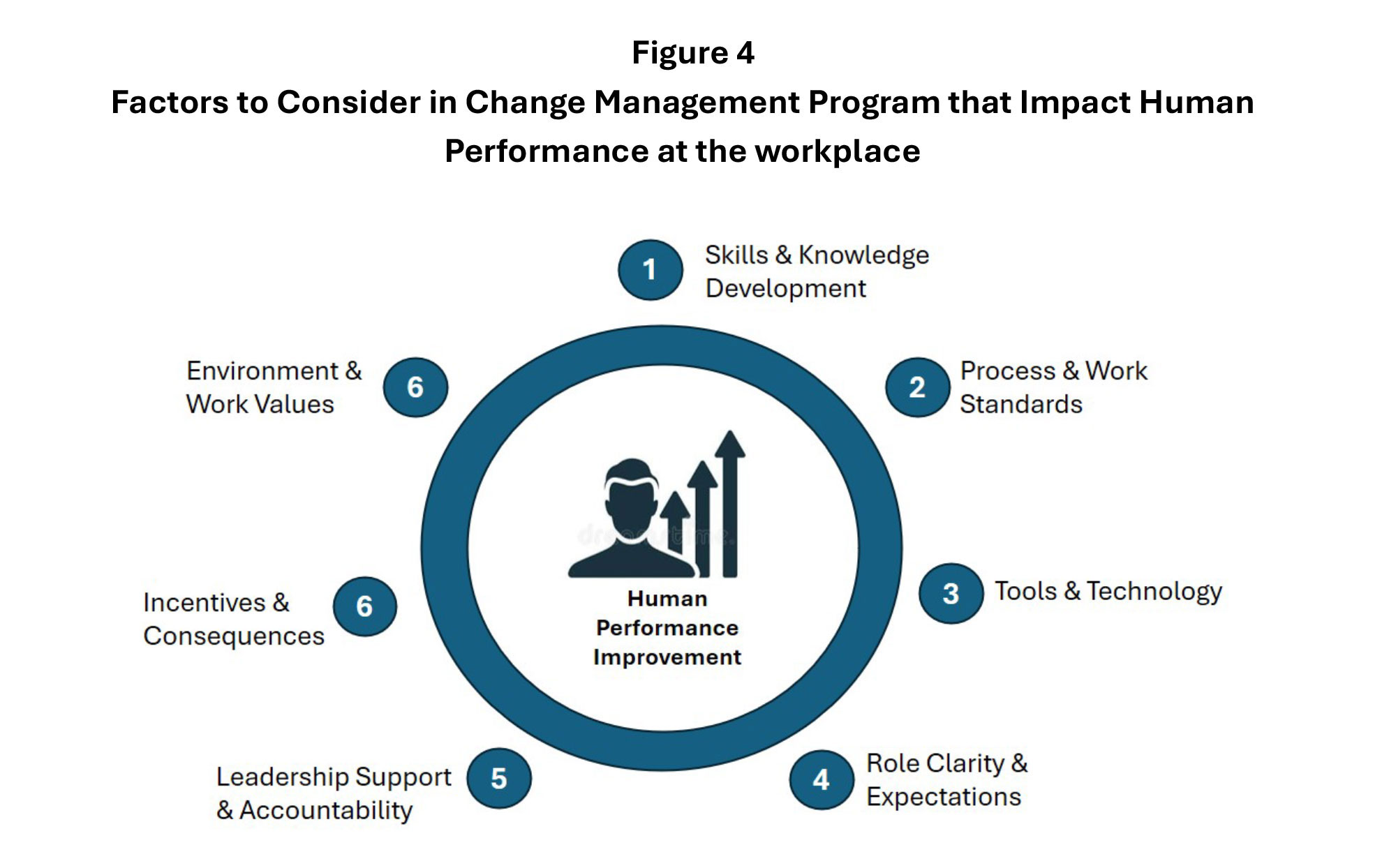
- Building capabilities through the Human Performance Improvement (HPI) - the HPI model (Figure 4) can be applied to build organizational capability by first identifying the performance outcomes required to deliver strategy and value, then systematically diagnosing the factors that influence performance, including skills, knowledge, processes, systems, resources, incentives, and workplace environment. Rather than assuming that training is the solution, HPI focuses on closing performance gaps through targeted interventions such as capability development, coaching, process redesign, improved tools, clearer role expectations, performance management, and leadership support. By aligning individual competencies with organizational objectives and continuously measuring results, organizations create a structured approach to developing the knowledge, behaviors, and operating practices needed to improve performance and sustain capability growth over time. In this way, capability building becomes an integrated business process that links learning, execution, and value creation rather than a standalone training effort.
- Managing resistance to change – this generally occurs because people fear uncertainty, losing control, increased workload, or the possibility that they may not have the skills needed to adapt to the new situation. Employees may also resist if they do not understand the reasons for the change or believe it could negatively aYect their roles, relationships, or job security. To overcome resistance, organisations should communicate clearly about the purpose and benefits of the change, involve employees in the process, provide adequate training and support, and address concerns openly. Building trust, encouraging participation, and demonstrating strong leadership can help individuals feel more confident and committed to the change, increasing the likelihood of successful implementation.
Source: developed for this paper
Conclusion & Implications for Leaders
The preceding discussion highlights that sustainable value creation depends not only on identifying opportunities but also on building the organizational mechanisms required to realize them consistently. Achieving the value ambition of an organization requires a sustained value creation that continuously learns and improves. Value creation cannot be a one-time program but needs to become part of how the organization operates every day. Summarizing what has been discussed in this paper, the following seven key points should be present in a sustainable value creation discipline:
- Leadership underwriting an executable value creation plan. Before investing or making changes, establish the baseline, validate improvement opportunities, assess people, capital and resources required. Distinguish between proven opportunities versus assumptions and opinions.
- Keep customers upfront and central. Identify what customers are willing to pay for: quality, engineering capabilities, reliability, speed and flexibility. Prioritize those opportunities that strengthen your position with customers leading to market power.
- One integrated value creation plan with priorities. Whatever framework the organization uses or whatever way value creation opportunities are categorized connect them together so that they are deployed in a cohesive approach and prioritized (Limit to 3 to 5 priorities). Example: connect commercial growth opportunities with required engineering, operations and quality improvements priorities.
- Provide access to expertise with clear accountability. Some issues require expert knowledge. It is easy to talk about the “What” but clarity on the “How” is required for eYective execution. Whatever experts are brought in ensure there is clear accountability, expected results and process to transfer knowledge.
- Manage for short-term results and long-term capability development. Value creation needs to be structured so that they address short-term issues that are critical for business success and integrating them into longer-term new or enhanced capability development eYorts. Short-term actions should not be taken if they weaken the overall competitiveness of the firm.
- Link value creation initiatives to financial outcomes. Track the linkages between improvements to operations key performance indicators (KPIs) to financial measures such as margins, expenses, revenue and cash.
- Make it a part of the organization operating culture. Embed reviews, measures, controls and employee involvement as a core part of how the organization operates, solves problems and sustains performance.
In conclusion this paper discussed the topic of value creation strategy as closing the gap between the current enterprise value and its potential enterprise value. A four-step framework to close this gap and achieve the organization value ambition was presented. A list of value gap strategic approaches was listed, followed with a discussion on the various obstacles to value creation strategy execution at both the strategic and tactical level. A multi-layered approach to transformation and change management to improve value creation strategy execution eYectiveness was presented. The paper ended with a list of recommended management actions.
Source: developed for this paper
References
- Bain Global Private Equity Report 2026, Global Private Equity Report 2026 | Bain & Company
- BCG 2025 Value Creators Report, The Value Creators Report Collection | BCG
- Clark, P.J. and Neill, S. (2001) The Value Mandate, Maximizing Shareholder Value Across the Corporation, AMACOM, USA.
- EIU (2013) Project Management Institute, Economics Intelligence Unit.
- Gilbert, T. (2007) Gilbert's Behavior Engineering Model (BEM) Human competence: Engineering Worthy Performance (Tribute edition), PfeiYer, San Francisco.
- Kotter, J. (2026) The 8-Step Process for Leading Change | Dr. John Kotter
- Kotter, J.P. (2012) Leading Change, Harvard Business Review.
- Leinwand, P. and Mainardi, C. (2016) Strategy That Works, Harvard Business Review Press.
- Mankins, M. and Steele, R. (2005) Turning Great Strategy into Great Performance, July-August, Harvard Business Review.
- McKinsey (2022) The Science Behind Transformations: Maximizing Value During Implementation.
- McKinsey Global Private Markets Report 2026, Global Private Markets Report 2026 | Private Capital | McKinsey & Company
- McKinsey Quarterly (2008), Enduring Ideas: The 7-S Framework"
- Robert S. Kaplan, R.S. & Norton, D. P. (2008) The Execution Premium, Harvard Business Review Press, USA.
- Rummler, G.A. and Brache, A.P. (1995) Improving Performance: How to Manage the White Space on the Organizational Chart, Jossey-Bass.
- Van Tiem, D.M., Moseley, J.L. and Dessinger, J.C. (2004) The international society for performance improvement HPT model in Fundamentals of Performance Technology, 2nd Edition, ISPI.
About the Author:
Dr. Fernando Kevin Vince is an accomplished business leader, author, educator, and strategist with over 30 years of international experience spanning multinational corporations, regional enterprises, and private equity-backed businesses. His work focuses on helping organizations create sustainable value through the integration of strategy, operational excellence, digital transformation, and organizational capability building.
Combining deep practical experience with a multidisciplinary academic background, Dr. Kevin holds doctoral and master's qualifications across business strategy, operations management, accounting and finance, marketing, human capital management, and digital transformation. He is also a Fellow and certified professional of several international institutes covering finance, marketing, management, and quality excellence.
In addition to serving as Managing Director of Prime Movers Equity, Dr. Kevin has been Adjunct Faculty at Nanyang Technological University for more than 15 years. He has authored nine books and numerous publications addressing leadership, competitiveness, business transformation, and value creation.
His current research, advisory, and investment interests focus on private equity, value creation strategy, and the development of integrated management systems that align strategy, capital allocation, operational excellence, ESG, and people to drive superior business performance.
Website: https://www.kevinfernando.sg